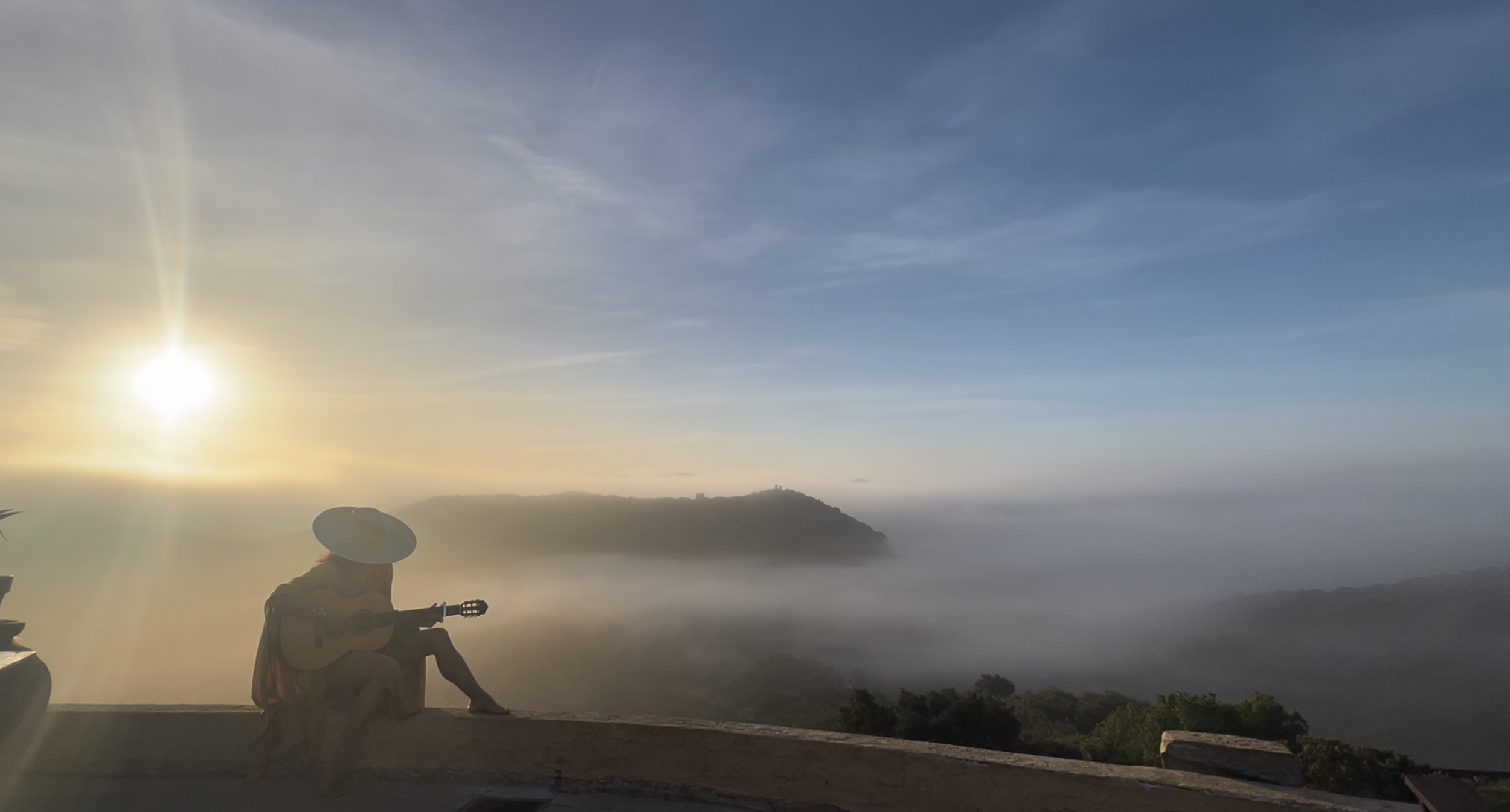
Music can be yours, to have and to hold.
Keep Music Human is a 2-month beginner music program to learn the harp or guitar - for adults who are ready to play music and use it as a biohack for brain health, longevity, and emotional expression. A neuroscience-informed, somatic and intuitive music method that has led hundreds of people from zero experience to fully-embodied musician.
Feel the freedom, fun, and flow of music.
The window to learn music is open. It always has been.
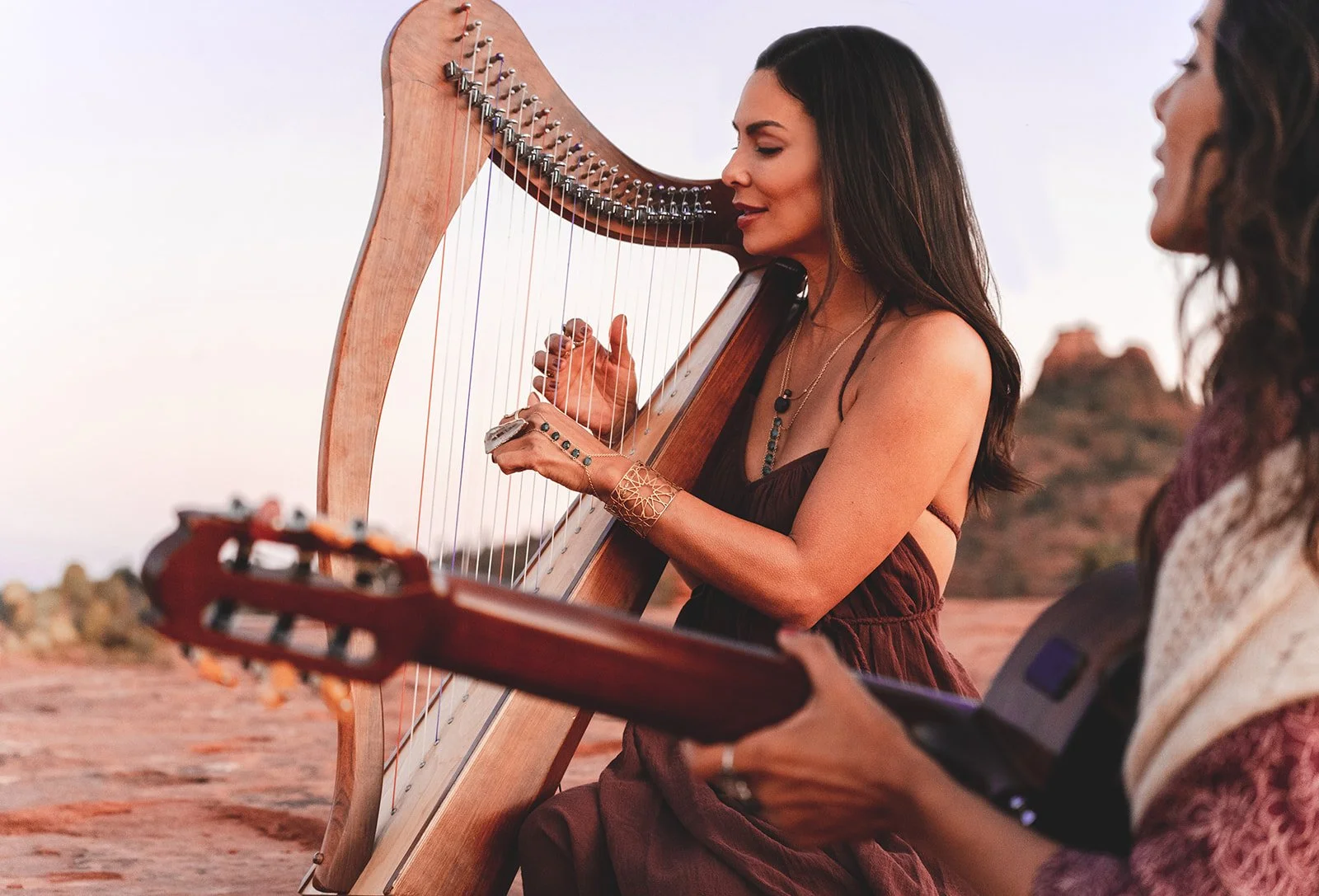
The most persistent myth in music is that adults can't really learn it - that there's a window, and yours has closed.
The neuroscience disagrees. Decisively.
Research published in the Annals of the New York Academy of Sciences confirms what great teachers have always known: the adult brain is fully capable of structural, lasting change through playing an instrument and singing. The question was never your potential. It was whether anyone had taught you in a way your nervous system could actually receive.
Keep Music Human is built on that distinction. We are a program for accomplished adults who carry a lifelong relationship with music - mostly unrealized - and are ready to activate it. Through harp and guitar, taught through an unconventional, intuition-led, neuroscience-informed method, we teach you to play the way humans have always learned: through the body first, the theory later, the joy throughout. Scarlett de la Torre’s unique somatic, intuitive approach to learning music has turned hundreds of adults with zero musical experience into fully-embodied musicians.
Allow us to support you in your vision to embrace music.
This program is a combination of live Zoom classes for technique and theory received in the comfort of your own home or office, and in-person music immersion days in Topanga, The Amazon Rainforest of Brazil, or your own bespoke immersion retreat.
Two months. One instrument. One class a week.
Keep Music Human is a live on Zoom, weekly group program for absolute beginners. Each Tuesday at 11am PST, you come to class. You learn music theory the way it was always meant to be taught - through the body first, the brain second. Scarlett de la Torre has led hundreds of adults through the beginning portal of their musical journeys. Her method is unconventional by design: songs come before scales, feeling before notation. You start with sound, with your hands on the instrument - and the theory arrives in a more somatic approach, because it lands more deeply once you know what it feels like. By the end of two months, you will play songs. You will understand how music is built. You will have a practice that is entirely yours.
We offer in-person immersions to integrate these teachings so that the work lands fully into your body. Join us in the Brazlilian rainforest in November, or into a dedicated music integration day in Topanga, California - and your instrument comes with you.
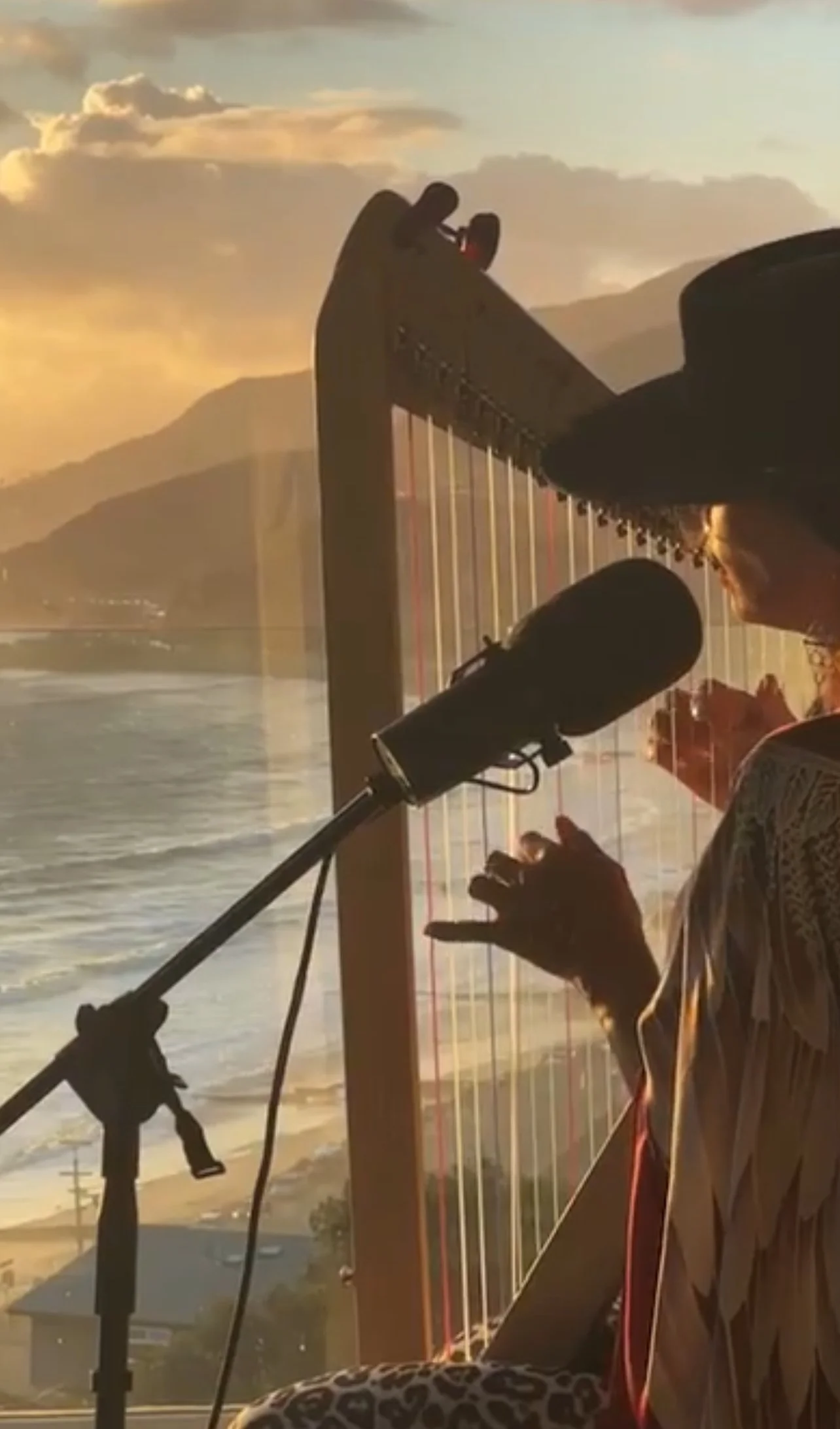
The Curriculum · Level 1
What you'll learn and how.
Each class builds on the one before. Zero prerequisites, zero auditions, zero grades. Curiosity and 15 minutes a day with your instrument is the full requirement.
The Architecture of Sound
Before a single chord, you learn to listen differently: how sound behaves, and how melody, harmony, rhythm, and bass relate to each other and to the way the human body processes music. This is the map that makes everything else make sense.
The Language of Music + Vocal Toning
Notes, intervals, steps, scales, decoded without jargon. Your voice enters as a primary instrument. Toning develops your ear, settles the nervous system, and opens the channel between what you hear internally and what your hands begin to find.
Chords, Patterns + Instrument Initiation
Your hands meet the instrument in earnest. Chord shapes, strumming and plucking patterns, the physical grammar of harp or guitar. This is where the instrument stops being an object and starts becoming a conversation.
The Geometry of Music
Music follows patterns that mirror the natural world, the same proportions found in water, in plants, in the seasons. Understanding these structures deepens the mystery rather than dissolving it. You leave this class hearing everything differently.
Finding Your Voice
Technique is the foundation. Expression is the house built on it. This class focuses on what makes your playing sound like you, the particular way you interpret a melody, hold a rhythm, inhabit a song. Presence, fully arrived.
Improvisation + Performance
Everything comes together in free play. You improvise. You lead. You perform for the group, as celebration, not test. This is where you discover the instrument was always a way of finding out what you have to say.
Integration, December 1 & 8
Two live sessions to bring your deepening back into the classroom, whether you traveled to the rainforest or joined us in Topanga. We close the full arc together in a final song circle: your song, your voice, your instrument.
Begins September 22 · Tuesdays, 11am PST · Harp or Guitar
The Schedule
Your two months, mapped.
Eight weekly classes over Zoom, an optional deepening in the Amazon, and a closing arc that brings it all home. Here's exactly how the season unfolds.
01 · VIA ZOOM
2-Month Music Program
Live, weekly, and recorded, start from zero and build a real foundation on your instrument.
02 · BRAZILIAN AMAZON
Rainforest Retreat
A living tradition of ancestral chant, ceremony, and song at the Sacred Village.
03 · VIA ZOOM
Integration
Bring the deepening of the rainforest back into the classroom and close the arc together.
What happens to your brain when you learn music as an adult.
Adult brains are open systems. The research is decades deep and runs in one consistent direction: active music-making changes the brain in ways that passive listening and most other cognitive activities do not.
When you learn an instrument, you recruit your auditory cortex, motor cortex, cerebellum, and limbic system simultaneously. You build new motor maps. You strengthen the bridge between your brain's hemispheres. Studies on adult beginners show measurable increases in gray matter in regions linked to memory, attention, and fine coordination, within months, not years.
Below cognition, singing and playing string instruments force slow, controlled exhalation, directly engaging the vagal brake, the branch of the autonomic nervous system responsible for calm, presence, and social attunement.
Learning an instrument as an adult lights up motor, auditory, and emotional centers at once, building new connections across the whole brain.
Instrument learning increases gray matter in regions linked to memory, attention, and coordination.
Gaser & Schlaug, 2003Music practice improves communication between brain hemispheres, sharpening cognitive flexibility and focus.
Schlaug et al., 2009First-time adult learners reshape motor maps and auditory-motor networks within weeks of beginning.
Wan & Schlaug, 2010Active music-making raises dopamine and serotonin, measurably shifting mood and reducing stress markers.
Salimpoor et al., 2011"What musicians call 'being in it' has a physiological address. I teach directly into this: body first, nervous system first, technique second."
This was made for you, if:
You’ve wanted to play an instrument for years and kept finding reasons to wait.
You started lessons once, quit, and are ready to begin again, differently.
You work with sound, ceremony, plant allies, or healing and want a real instrument in your hands.
You’re drawn to neuroscience or somatic practice and want music as a living tool, more than a hobby.
You want to learn songs that move you, Leonard Cohen to Yawanawa chants, Fleetwood Mac to the songs that make your heart sing.
You feel pulled toward the November deepening, the rainforest or the Topanga integration day, and want the musical foundation to meet it fully.
You’ve been told, or told yourself, that music is for other people. And some part of you has never believed it.
This program works regardless of prior experience, zero is welcome, or age. The oldest student in this program’s history was 74.
Student Reflections
Real results from real students.
Use the arrows to read more.
“I came to Scarlett while I was still recovering, and I wasn’t sure my mind could handle learning something new. My brain healed faster in the couple of months I was learning music with Scarlett than the entire 6 months before in Doctor care. Music became part of my recovery in a way I never expected.”
“If somebody had told me six months ago that I would be playing guitar and singing in public, I would’ve thought they were crazy. I’d always believed music was for other people, people with talent, people who started young. Scarlett showed me it was for me too.”
“I started these classes with a brain injury, genuinely unsure of what I’d be able to do. It was really incredible what I was able to learn, I’m playing songs now, and I’m so proud of how far I have come. It turned out to be so much more possible than I feared.”
“I’d taken music lessons before and always felt lost the moment theory came up. She was the first teacher that actually got me to understand music theory, and now I can transpose and compose in any key! It finally clicked in a way I didn’t think was possible for me.”
“I walked in convinced I had no musical ability whatsoever. Within the very first session I was learning to play songs I love on instruments I’d never even touched before, in a matter of 2 hours! I left realizing how much more accessible music is than anyone ever told me.”
“I spent my whole life believing I simply wasn’t a ‘music person.’ I never thought I would play an instrument, and now I do. This is beyond my wildest dreams. Scarlett made something I’d given up on feel completely within reach.”
“I came in with no real background and a lot of doubt about whether I could actually learn. You taught me the most beautiful medicine songs, and I play piano and guitar now! Forever grateful for how gently and clearly you opened that door.”
“What struck me most was how safe it felt to be a beginner. She opens the gates to music so easily, no one feels discouraged, and you are surprised how fast you learn! You leave each class believing in yourself a little more.”
Individual results vary. These reflections are personal experiences shared by students and are not a guarantee of outcomes, nor medical advice.
Your Music Mentor: Scarlett de la Torre
Scarlett de la Torre has been playing music since before she could speak. Music arrived first, before language, and it has carried her across continents, stages, and ceremonies on multiple continents.
Her life as a performer spans the stages of Montreux Jazz and the Royal Opera House, London, to Burning Man and sacred ceremony deep in the Amazon. She is a harpist, vocalist, composer, sound practitioner, and DJ whose musical range moves freely between concert halls, festivals, and indigenous ceremonial fires. She has served as ceremonial musician supporting the tours of Yawanawa, Huni Kuin, and Asheninka wisdom keepers, and she has trained in sound work with some of the most rigorous practitioners on the planet.
Her teaching was born through service. While working with trafficking survivors in the red light district of Calcutta through Beauty for Freedom, she raised funds for instruments, built a music program, and watched something she has never forgotten: people in the midst of profound suffering, singing and playing, and for those moments, returned to joy. She carried that work to Thessaloniki, where she built a music program for Syrian refugees at Elpida Home, sourced instruments, and witnessed parents weeping with gratitude as their children played guitar for the first time.
What she learned in those places became the foundation of her music methodology. Music is far more than talent. It is a human capacity. Scarlett has spent years developing a precise methodology for restoring it, in people who have been told they have none, in people whose nervous systems have been shaped by trauma, and in people who are simply searching for a new avenue of emotional expression.
Adults with zero musical experience become fully embodied musicians inside her containers. Scarlett calls this her greatest gift.
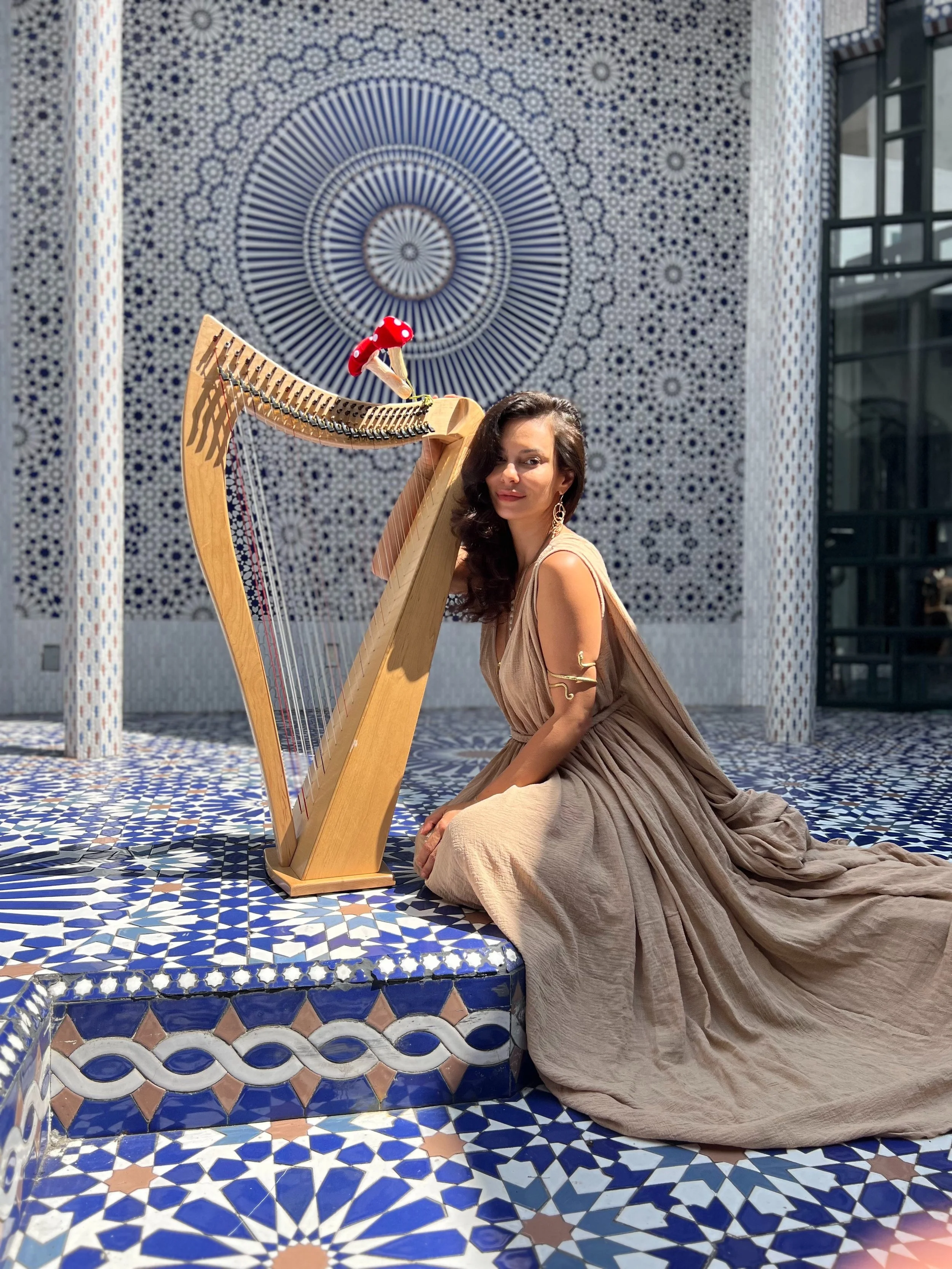
Take your instrument further: rainforest or Topanga.
After two months of building your foundation, there's an option to take your instrument somewhere new. You can go deep, or you can stay close to home. Both are complete in themselves.
Whichever path you choose, your instrument comes with you.
Ask About The IntegrationQuestions worth asking.
-
Yes, this program was built for exactly this person. The curriculum begins from first principles and moves at a pace that takes complete beginners to real fluency within two months. Zero experience is the ideal starting point.
-
A 22-string lever harp or an acoustic guitar with nylon strings, a tuning app (Pano Tuner is free), and a quiet place to practice. Full gear guidance arrives with your enrollment confirmation.
-
15 to 20 minutes a day. Consistency matters more than duration. The research on adult motor skill acquisition is clear: short daily contact with your instrument outperforms long, infrequent sessions every time.
-
Every class is recorded and replay access is included with enrollment. Watching the replay before the following week’s class keeps you current with the group. Live attendance is always encouraged. The real-time energy is a meaningful part of the experience.
-
The class runs across both instruments simultaneously and Scarlett teaches in a way that honors both. You are welcome to have both in front of you, but for the deepest progress, most students focus on one.
-
Payment plans are available above: 2-part and 3-part options. For scholarship inquiries, write to us directly through the contact form and we’ll have a real conversation.
-
Yes, absolutely. The Amazon immersion is completely optional. During that time, we’ll have a short break with recommended homework to keep your practice growing. You’ll also have the opportunity to join different immersions as they arise in the coming years.
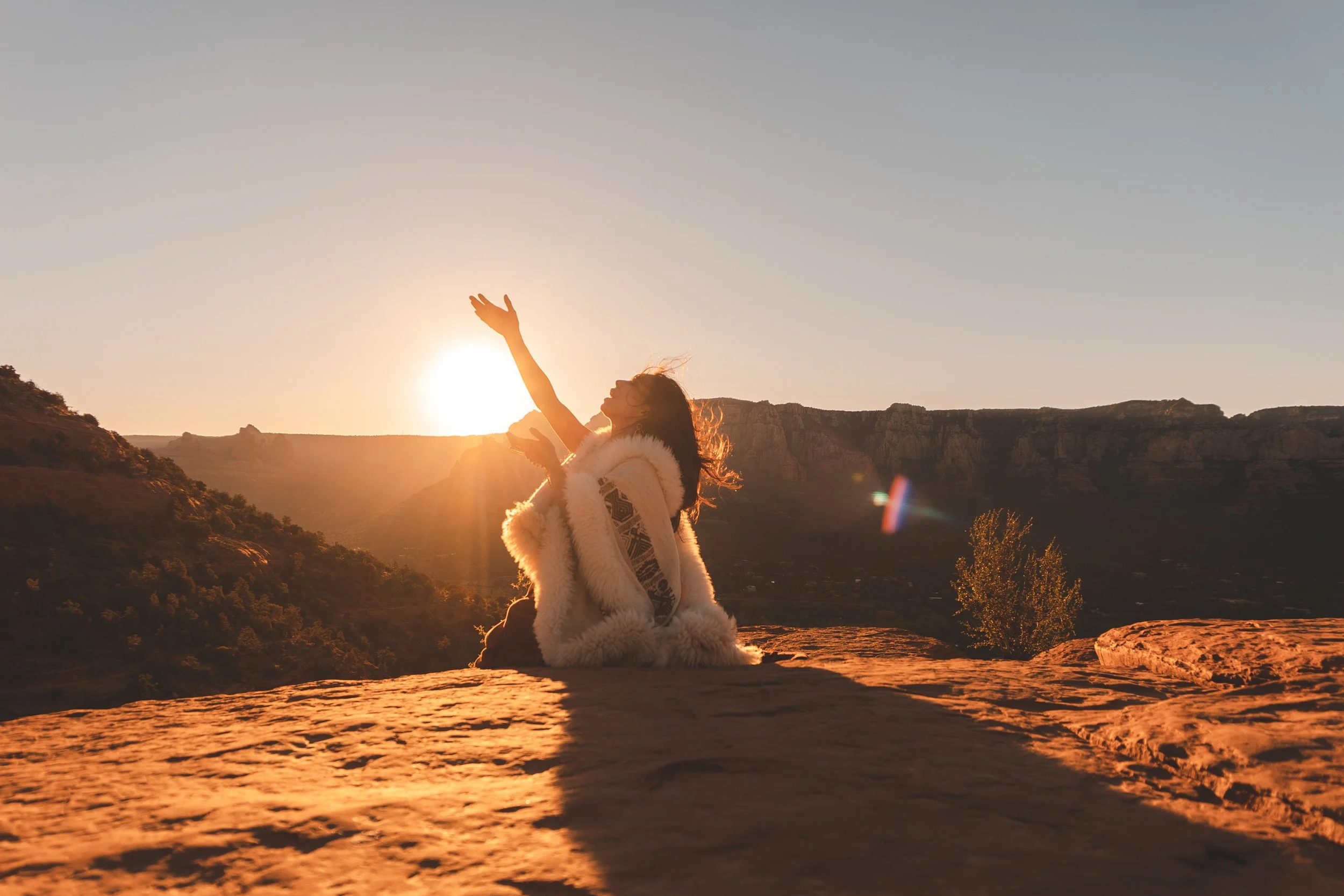
Your voice, your instrument, and your calling to learn music have been waiting. So have you.
Two months. One class a week. Real music, taught the way it always should have been. Begins September 22. Spots are limited, early enrollment is open now.